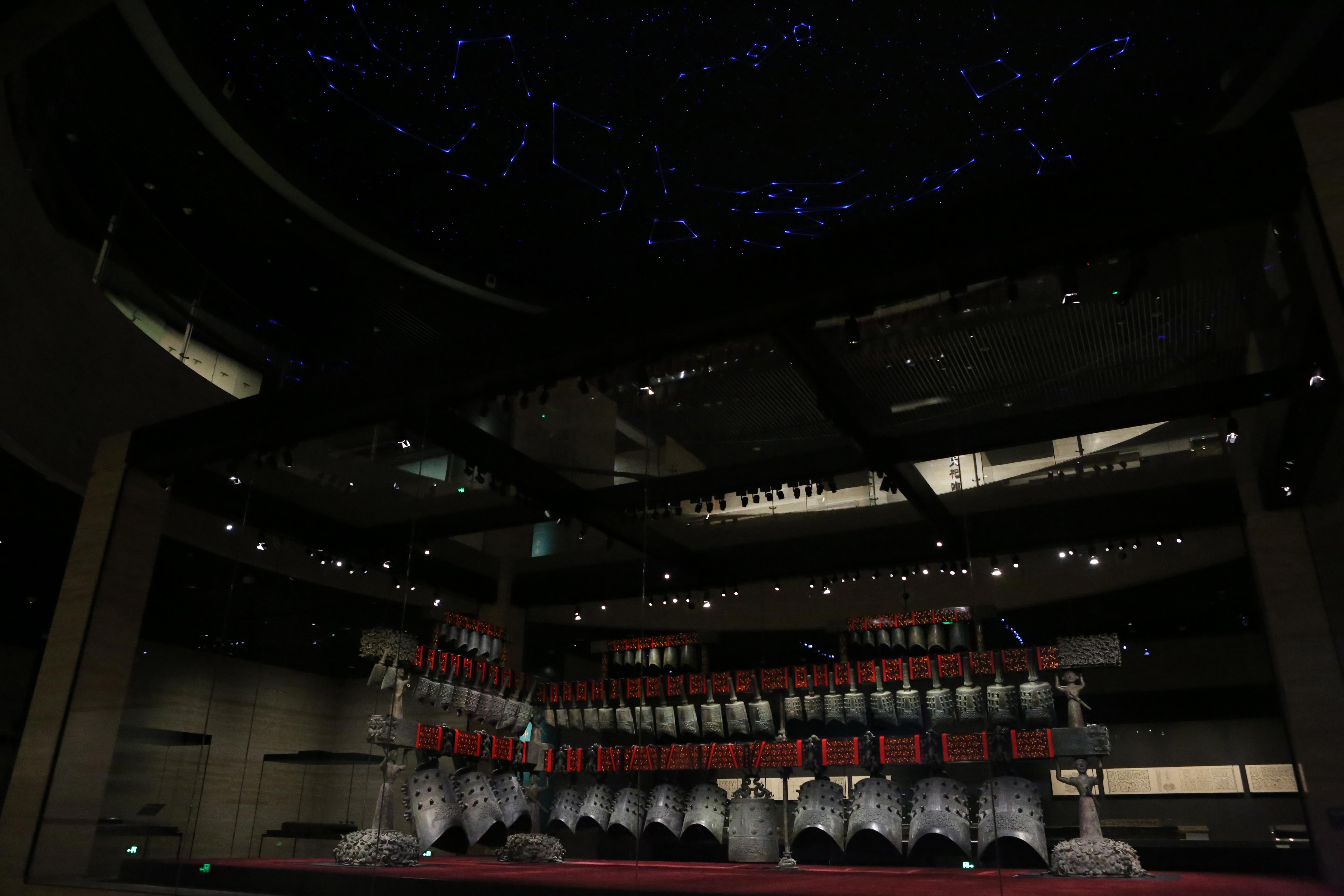
The exhibition “Marquis Yi of Zeng” is located on the first and second floor of the South Hall, covering 3,800 square meters.
Living in the 5th century BC, Marquis Yi of Zeng was the ruler of the vassal state of Zeng, during Zhou Dynasty (1046-256 BC). His tomb was discovered in Sui County (present-day Suizhou), Hubei, in 1978: Over 15,000 in number, the remarkably fine artifacts unearthed are manifestations of a highly developed ritual and music culture, a complex spiritual tradition with heaven, earth, divinities and ancestors at its core, and impressive achievements in bronze casting, astronomy, calendrics, music and art in ancient China.
The era in which Marquis Yi of Zeng lived was politically decentralized and culturally vibrant, coinciding with the Axial Age, when some of the world's greatest ancient civilizations reached their zenith. This period is often regarded as the “Axis Age” of human civilization’s development. The intellectual height reached by humanity at the time is evidenced by the archaeological finds yielded by the tomb of Marquis Yi of Zeng.
The exhibition is divided into six thematic sections: “Worshiping Heaven and Ancestors,” “The Sound of Bronze Bells and Stone Chimes,” “Appurtenances of Nobility,” “Rituals for Agricultural Blessings,” “Military Parades and Ceremonial Attire” and “Eternal Life After Death.” The exhibition offers a multifaceted interpretation of the artifacts from the Tomb of Marquis Yi of Zeng, highlighting the ancient ritual and musical civilization as well as the distinctive artistry of the artifacts.